
 Brasília
 Milan
Milan
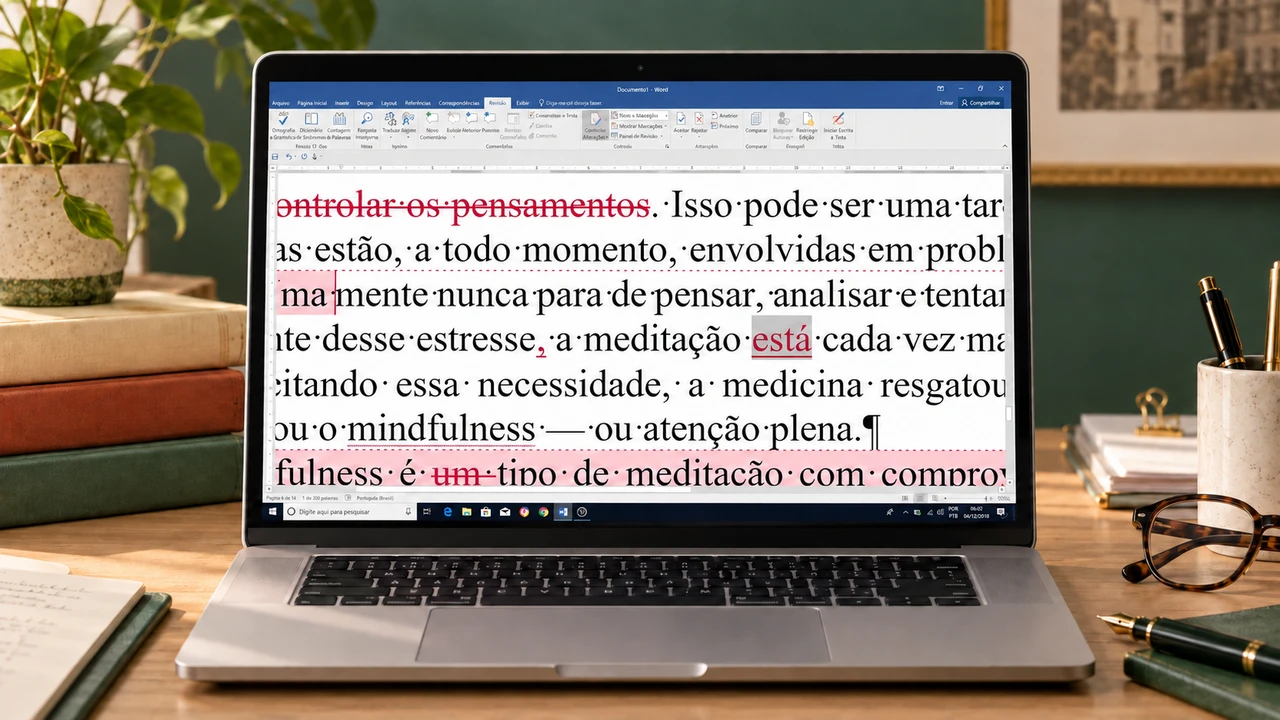
Many people may think that the profession of proofreader requires extensive academic training. After all, working with language, with the various types of texts that exist, and with all the particularities of grammar and writing styles is certainly not an easy task and demands considerable intellectual effort. From this perspective, of course, a solid education, with an undergraduate degree, a master’s degree, or even a doctorate, can help a proofreading professional understand all these aspects, which certainly facilitates the process of reviewing a text and qualifies the professional to work with a wide variety of text types, from the simplest to the most complex. However, an outstanding academic education is of little use if the proofreader spends more time on theory than on practice.
Proofreading a text is much more practical than theoretical. In the job market, we find many proofreaders who did not graduate in Languages and Literature, for example, but who nevertheless managed to build a solid career in proofreading because of their skills related to the Portuguese language and because they exercise those skills through proofreading, training their eyes and perception for the smallest details, meanings, deviations, and inaccuracies that may be hidden in a text.
Obviously, theory — which enables us to understand syntax, morphology, semantics, stylistics, and everything else behind a written text — should be valued. What matters most to the proofreader, however, is knowing how to apply that theory. More than understanding how a text is produced, proofreading consists of transferring all this knowledge to what has been written, in order to ensure that the text fulfills its function of communicating and of being understandable and pleasant for the reader. And the more the proofreader does this work, the easier it becomes to recognize the author’s mistakes and successes, what can be changed, how to make the changes; in short, the professional acquires the feeling needed to review the text in the best possible way. Just like a tennis player, who through many hours of daily training and many matches played becomes capable of developing the sensitivity and perception to anticipate the opponent’s and the ball’s movements in order to win the point, this sensitivity to the minutiae of a text through attentive reading is also fundamental for the proofreader, and it can only be acquired through practice.
Therefore, although having good command of the Portuguese language and enjoying reading are essential prerequisites for someone who wants to become a proofreader, a highly theoretical education is no guarantee that this person will become a great professional. What will ensure this is putting learning into practice, with a great deal of reading and work, diversifying one’s portfolio and thereby acquiring the sensitivity necessary to reveal the charms and correct the imperfections hidden in each text.